
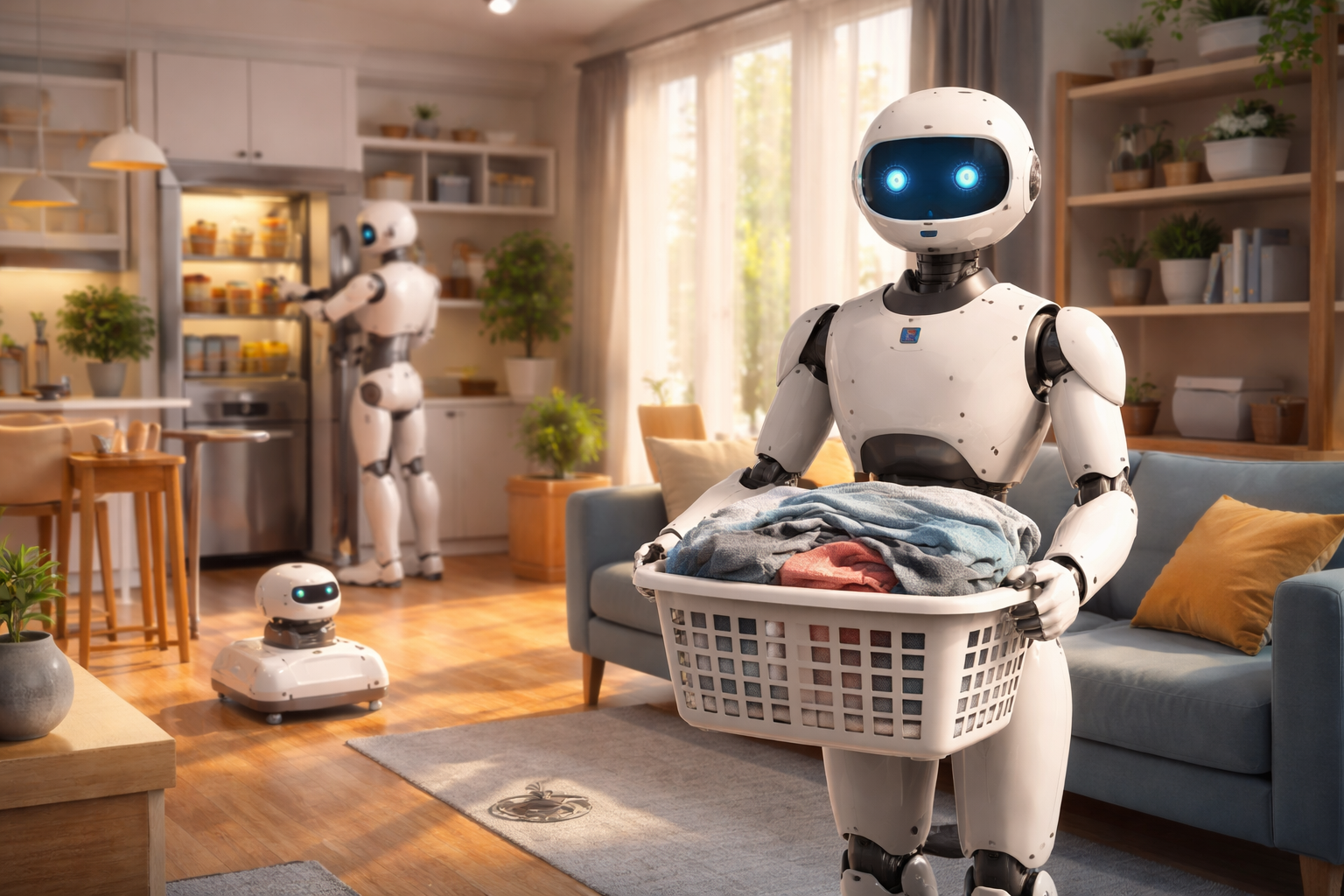
Welcome to the Age of Home Robots: House‑Chore Automation Comes Into Focus for 2026
Click here to view/listen to our blogcast.
For a moment, let’s step away from ransomware, governance frameworks, and breach notifications.
A different kind of technology story is unfolding, one that feels more futuristic, but far more personal. According to recent coverage tied to CES 2026 and major robotics announcements, household robots capable of performing real chores are moving from concept demos into early market reality.
This is not about smarter vacuums or voice assistants. This is about machines designed to physically interact with your home and take work (and food scraps) off your plate.
From Sci‑Fi to Show Floor
At CES 2026, multiple manufacturers demonstrated robots built specifically for household tasks. These were not industrial arms repurposed for marketing videos. They were designed to move through living spaces, recognize objects, and assist with everyday routines.
One of the more visible examples was LG’s humanoid home robot concept, built around what the company calls a “Zero Labor Home.” It demonstrated item retrieval, appliance interaction, and coordination across a smart home ecosystem. LG’s vision is ambitious, but it is only one approach among many being explored across the industry.
Other vendors and startups showcased robots focused on narrower but meaningful chores, reinforcing that this is not a single‑vendor story but a broader shift toward practical home automation. Notable examples included:
- Laundry handling and folding demonstrations
- Advanced floor‑cleaning robots that detect spills and obstacles dynamically
- Modular robots that swap tools depending on the task
- Humanoid home assistants from startups such as 1X Technologies, whose NEO robot is already accepting pre‑orders at a price point closer to that of a Harley-Davidson motorcycle than an industrial robot, signaling a serious push toward consumer‑accessible home robotics
The message from the industry was clear. Home robotics is no longer about novelty. It is about usefulness.
What These Robots Can (and Can’t) Do Yet
It is important to separate excitement from reality.
The robots expected to reach consumers in 2026 are not fully autonomous house managers. Many tasks still require guidance, structured environments, or limited supervision. Dexterity, safety, and reliability remain active challenges.
That said, meaningful progress is being made. Today’s early home‑chore robots can:
- Navigate homes using vision‑based AI
- Recognize common objects and appliances
- Perform repetitive physical tasks with consistency
- Integrate with smart home platforms for coordination
What they cannot yet do reliably is handle every edge case that humans manage intuitively, such as cluttered environments, unexpected obstacles, or complex decision‑making.
This mirrors the early days of smartphones and self‑driving features. The first versions are imperfect, expensive, and aimed at early adopters. The long‑term impact, however, is hard to ignore.
Who Will Adopt First
Initial adoption will likely come from:
- Technology enthusiasts and early adopters
- Households supporting elderly or mobility‑limited family members
- Busy professionals willing to trade money for time
- Smart‑home users already invested in connected ecosystems
Early pricing is expected to be high, with some humanoid home robots already rumored or announced in the lower five‑figure range. As with most consumer technology, costs are expected to decrease as competition and manufacturing scale improve.
Why This Matters Beyond Convenience
House‑chore robots are not just about saving time. They represent a shift in how technology moves from screens into physical spaces. For decades, digital tools have optimized information work. Robotics brings automation into the physical world, where labor has always been harder to replace. If successful, this wave of technology could:
- Redefine how households manage daily responsibilities.
- Extend independent living for aging populations.
- Reduce physical strain and repetitive labor.
- Push smart homes beyond passive automation into active assistance.
A Familiar Pattern
There is a parallel here that should feel familiar.
Just like cybersecurity, cloud platforms, and collaboration tools, robotics adoption will not happen all at once. It will happen gradually, unevenly, and sometimes awkwardly. The winners will not be the flashiest demos, but the systems that integrate cleanly into real‑world workflows and human behavior.
It is also important to recognize that new technology rarely arrives without new risks. As robotics moves into homes and physical spaces, it introduces challenges around safety, reliability, privacy, and security. Network-connected devices that can see, move, and interact with the physical world expand the attack surface in ways that feel very different from laptops and phones. As with earlier technology waves, the households and organizations that think ahead about access controls, updates, governance, and responsible use will be far better positioned than those who adopt first and ask questions later.
Final Thoughts
House chore robots arriving in 2026 may not replace human effort entirely, but they mark an important turning point. Technology is no longer just helping us work faster or communicate better. It is beginning to take on physical responsibilities inside our homes. As with any emerging technology, the question is not just what it can do, but how thoughtfully it is adopted.
If you are curious about how emerging technologies move from hype to practical value, or how to evaluate new tools before they disrupt your routines, CDML Computer Services helps organizations and individuals alike make informed, realistic technology decisions.
Technology should reduce friction, not create it. If you’d like to explore what that means for your environment, now or in the future, we’re always happy to talk.
Stay safe. Stay informed. Stay compliant.

📞 Contact us here: https://cdml.com/contact/
📚 Read more on our blog: https://cdml.com/blog-2
📺 Listen to our blogcasts: https://www.youtube.com/@CDMLComputerServices