
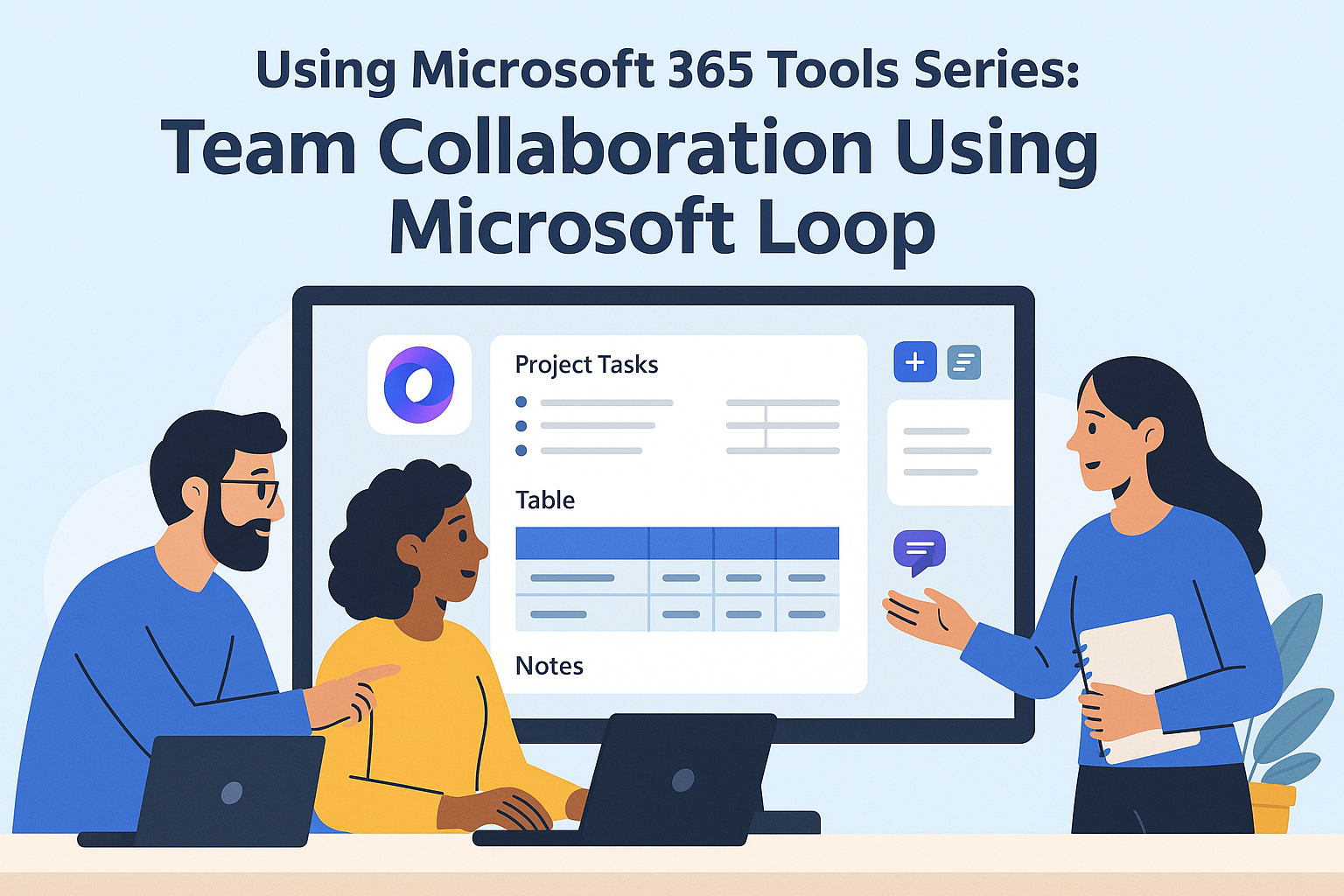
Using Microsoft 365 Tools Series: Team Collaboration Using Microsoft Loop
Click here to view/listen to our blogcast.
In today’s fast-paced hybrid work environments, small and medium-sized businesses (SMBs) need collaboration tools that are fast, flexible, and built to work across multiple platforms. Fortunately, if you’re already using Microsoft 365, you’ve got one of the most powerful and often underutilized collaboration tools available: Microsoft Loop.
Loop is designed to help teams co-create and organize content in a modular way, without bouncing between disconnected apps. This article will introduce you to what Loop is, why it matters for SMBs, and how to start using it for better team collaboration today.
🔄 What Is Microsoft Loop?
Microsoft Loop is a next-generation productivity tool that brings together components (like task lists, checklists, tables, and notes), pages (to organize those components), and workspaces (to collaborate in real-time) into a seamless experience across Microsoft 365.
Loop components are especially powerful because they can live in Outlook, Teams, Word for Web, and OneNote, and they update everywhere in real time. That means your team can contribute and stay in sync without switching tools or duplicating content.
📘 Learn more:
👉 Official Microsoft Loop “Getting Started” Guide
✅ Why SMBs Should Care
Many SMBs juggle a mix of tools spreadsheets, emails, chat apps, maybe a project tool like Trello or Monday.com. That fragmentation creates confusion, lost time, and redundant work. Loop helps you simplify and centralize:
- No more back-and-forth emails: Loop task lists embedded in an email or chat update automatically.
- Shared context: Everyone can see the same page, notes, or checklist even if they’re in different apps.
- Real-time accountability: Assign tasks, track progress, and keep everyone aligned from one place.
💼 Real-World SMB Example
Let’s say your 8-person team is launching a new marketing campaign:
- You create a Loop page to outline goals, milestones, and deliverables.
- Within that page, you embed a Loop component a task list with due dates and owners.
- You paste that component into a Teams chat and an Outlook thread with your project stakeholders.
- As each person checks off tasks, all instances of that component update live no extra emails, no versioning errors.
🛠️ How to Start Using Loop Today
Here are a few easy ways to introduce Loop into your workflow:
1. Create a Task List in Outlook or Teams
- Open a new message or chat.
- Click the Loop icon (∞ symbol).
- Choose “Task List” and start assigning items.
2. Start a Loop Page in the Loop App
- Navigate to loop.microsoft.com and sign in.
- Create a new workspace for your project or team.
- Add pages for goals, resources, notes, and assignable tasks.
3. Replace Meeting Notes with Loop
- During meetings, use a shared Loop component to jot down takeaways.
- Share that component in Teams or email so everyone has access and can contribute later.
🎥 Recommended YouTube Tutorials
These short, beginner-friendly videos are great for exploring Loop features:
- Microsoft Loop Tutorial (2025) – Beginners Guide
A comprehensive walkthrough of creating and using Loop workspaces and components. - Microsoft Loop for Beginners: Easy Note-Taking and Collaboration
Highlights how Loop can replace traditional note-taking and collaboration tools. - Microsoft Loop Overview
Great for understanding Loop’s potential in your Microsoft 365 workflow.
💡 CDML’s Pro Tips for SMBs
- ✔️ Use Loop components instead of long email threads.
- ✔️ Link Loop pages to Microsoft To Do and Planner using Power Automate for advanced tracking.
- ✔️ Start small one project, one team then scale Loop across departments.
Final Thoughts
You already have access to Microsoft Loop, so there’s no need to pay for additional project or note-sharing tools. By using Loop strategically, your team can cut through the noise, align faster, and collaborate more effectively.
Contact us today if you want help setting it up.

📞 Contact us here: https://cdml.com/contact/
📚 Read more on our blog: https://cdml.com/blog – 2
📺 Listen to our blogcasts: https://www.youtube.com/@CDMLComputerServices